


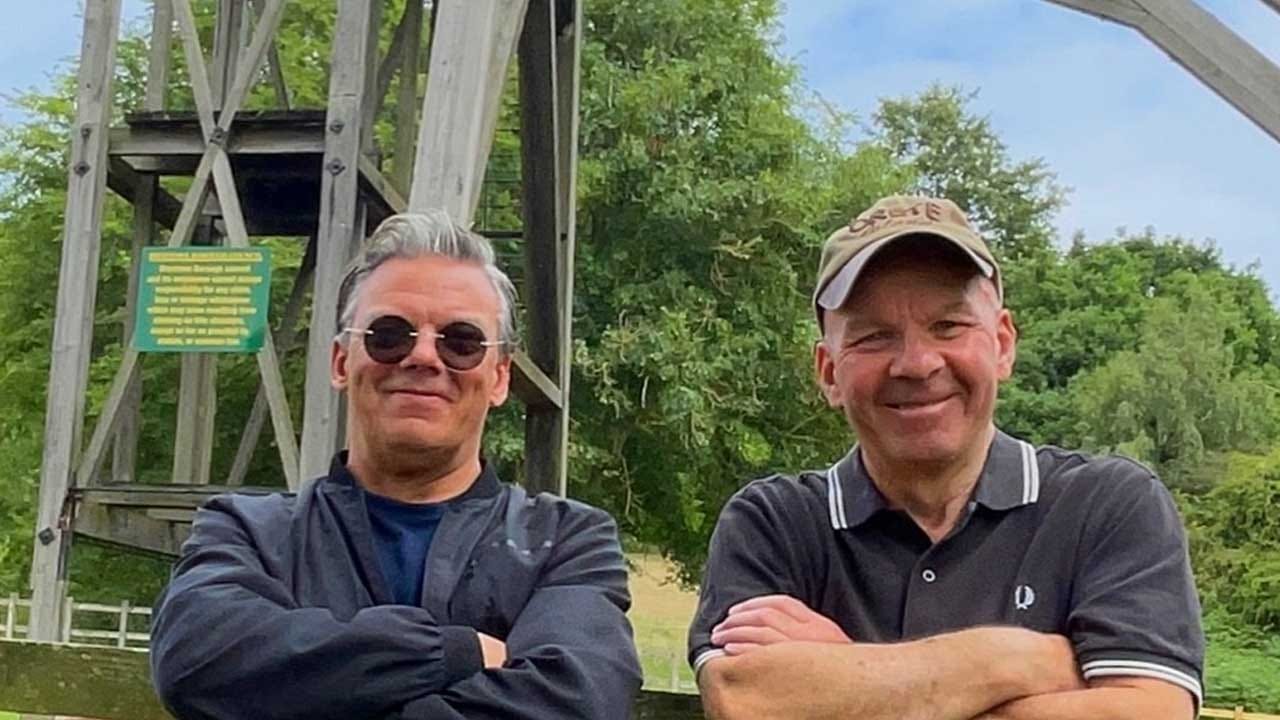
Week one was Adrian. Week two James. Week three - David is answering questions on a game-show created in ElevenLabs and we’re also print-planning with Claude
Welcome to the Design Intelligence Substack from Digital Producer Paul Fillingham. Sound design by Studio-thinkamigo. It’s here where we discuss the highs and lows of the creative process, from the very latest developments in AI-assisted design to digital storytelling in ‘Houdini Window’. This Substack is narrated in the voice of Paul Fillingham.
Week one was my meeting with my good friend Editorial Consultant Adrian Reynolds, we sat in a Portuguese cafe in Nottingham. Week two was James Walker, discussing ‘Houdini Window,’ game-shows, and garden sheds. Week three, it’s the turn of ex-coal miner and latter-day mining historian, Dr David Amos.
David and I have been co-directors of a Community Interest Company called Mine2Minds since 2015. We were already involved in digital heritage projects a couple of years earlier. Recording mining culture and linguistics before they’re gone for good.
Our projects have never been about nostalgia. Far from it. Mining heritage at least in Nottinghamshire is what you would call ‘a contested history.’ We take a very pragmatic look at what was a very dirty business. And our business involves dispelling romantic notions and misleading iconography.
We’ve interviewed many people in their twilight years, capturing lived experience and documenting the inevitable shift from black coal to green energy. A shift which is good for the health of our communities and good for the planet.
Funded by the likes of the Arts and Humanities Research Council, the National Lottery and a run of University and Local Government partners.
Origins
After leaving school, David went down the pit, whilst I swanned off to art school. He worked underground until the pits closed, then he went to university and reinvented himself as Dr David Amos.
That’s how we tell our story to the students and interested parties who attend our events. We’ve done a few. And published a few books along the way. We’ve staged exhibitions too, including a touring exhibition called ‘Coal Communities and Change’ which was hosted by the National Mining Museum for England and attracted over 70,000 visitors over a six-month period as it toured the East Midlands and South Yorkshire. And that’s some audience!
70,000 visitors
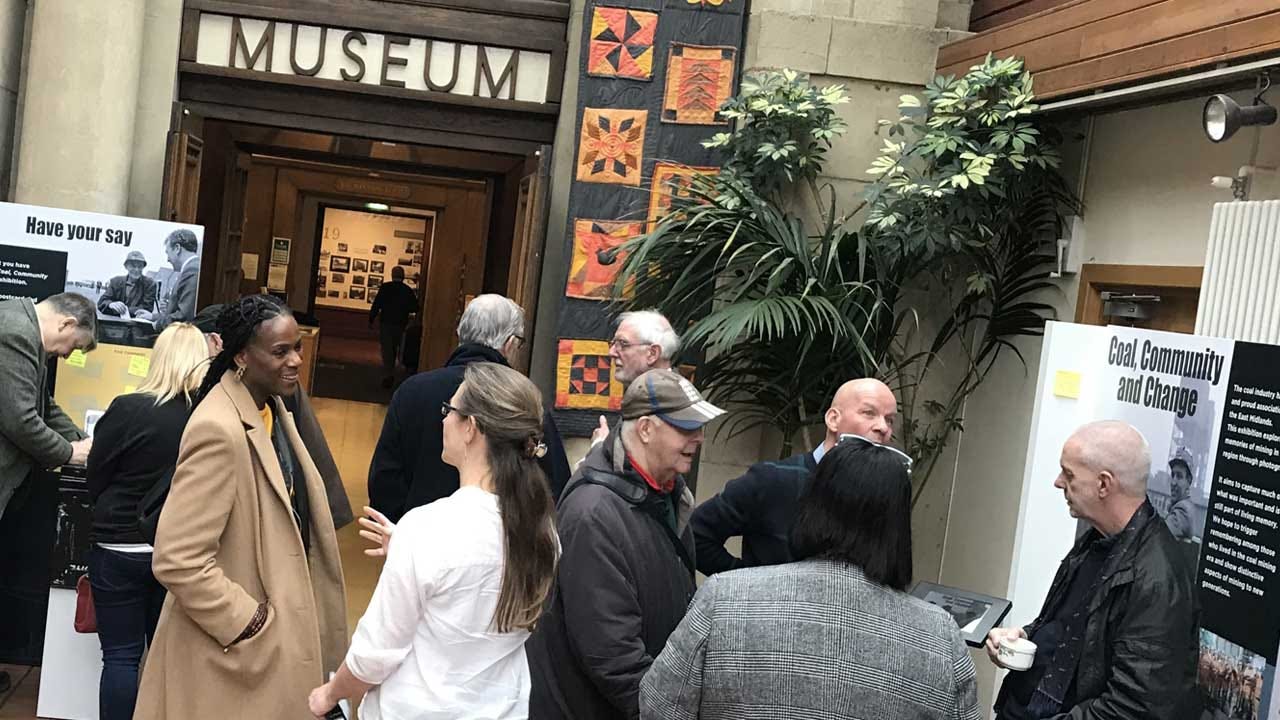
There’s a new book to discuss too ‘Coaltown Days.’ But first, it’s time for a nice cup of tea, while I bring David up to speed with what’s been covered in the other two recordings.
So I run through it. The Portuguese pastries with Adrian. The Central TV flashback with James. Unfortunately and rather foolishly, I mentioned railway viaducts. Reawakening his interest in what he calls ‘locomotives.’ But what everybody else knows as ‘trains'.
‘Give him a topic like this and it’s like the Flying Scotsman at full speed. He’s off at a hundred mile an hour. Anybody who has ever met David knows that you can’t stop him when he’s like this. He’s literally the runaway train.
“I’ve got an old photo of Mansfield Viaduct,” he says. “With a steam train going over it. I’ll email it to you.”
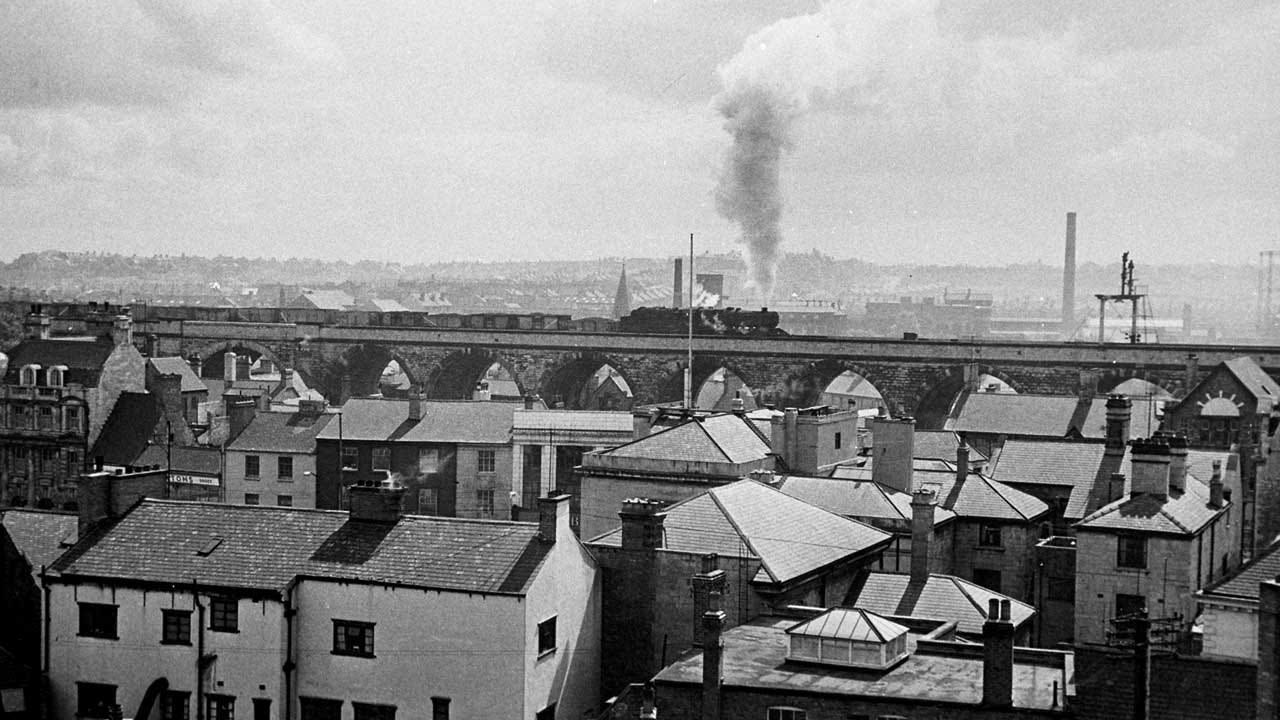
“Great,” I said. Then quickly changed the subject to TV game-shows.
“I’ve had this idea, David.” I said.
I asked him to imagine the conveyor belt on the BBC’s old light entertainment show, ‘The Generation Game.’ Which became embedded in the British psyche during the 70s and 80s. But this time, on the conveyor, instead of prizes and the infamous cuddly toy, we’d have mining memorabilia.
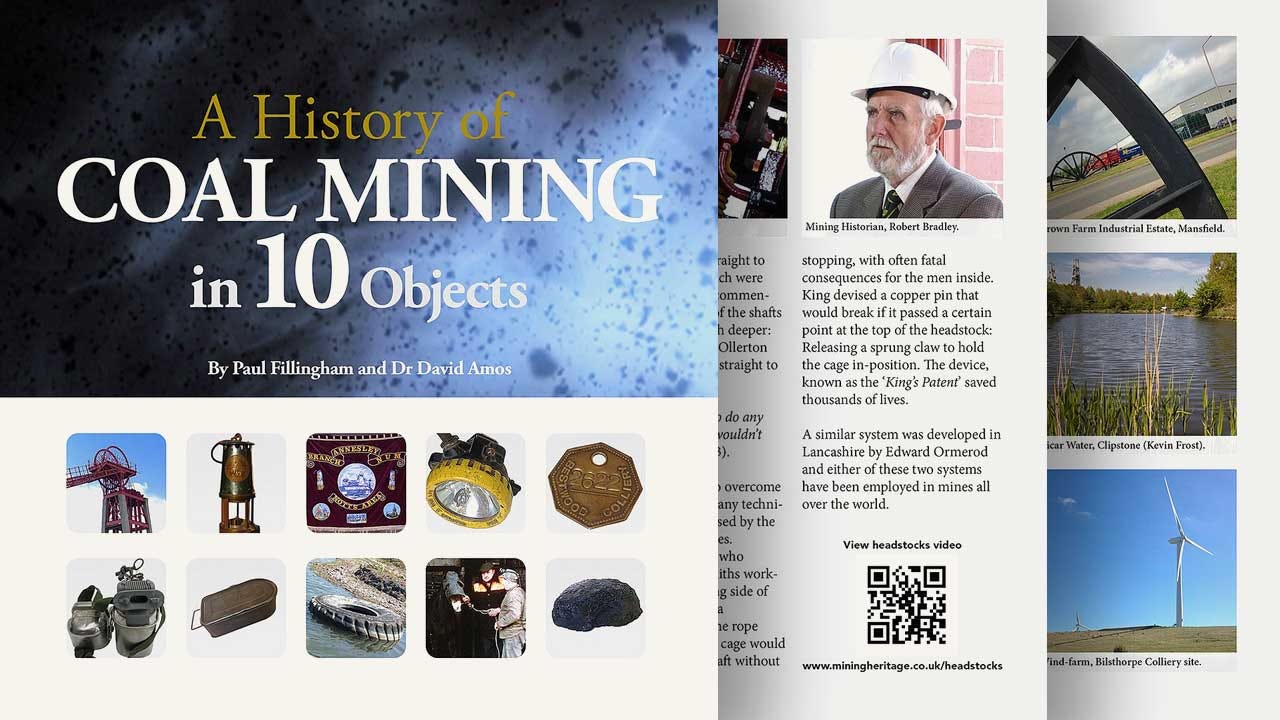
He liked this idea, not realising the trap I had just set. I explained that we could reuse the things we’d chosen for our first research project, which was called ‘A History of Coal Mining in 10 Objects.’ Each object would appear in turn on the conveyor belt and I’d invite him to talk about each one. David nodded enthusiastically. It wasn’t until he was in the studio that I mentioned that he would only have thirty seconds to talk about each object.
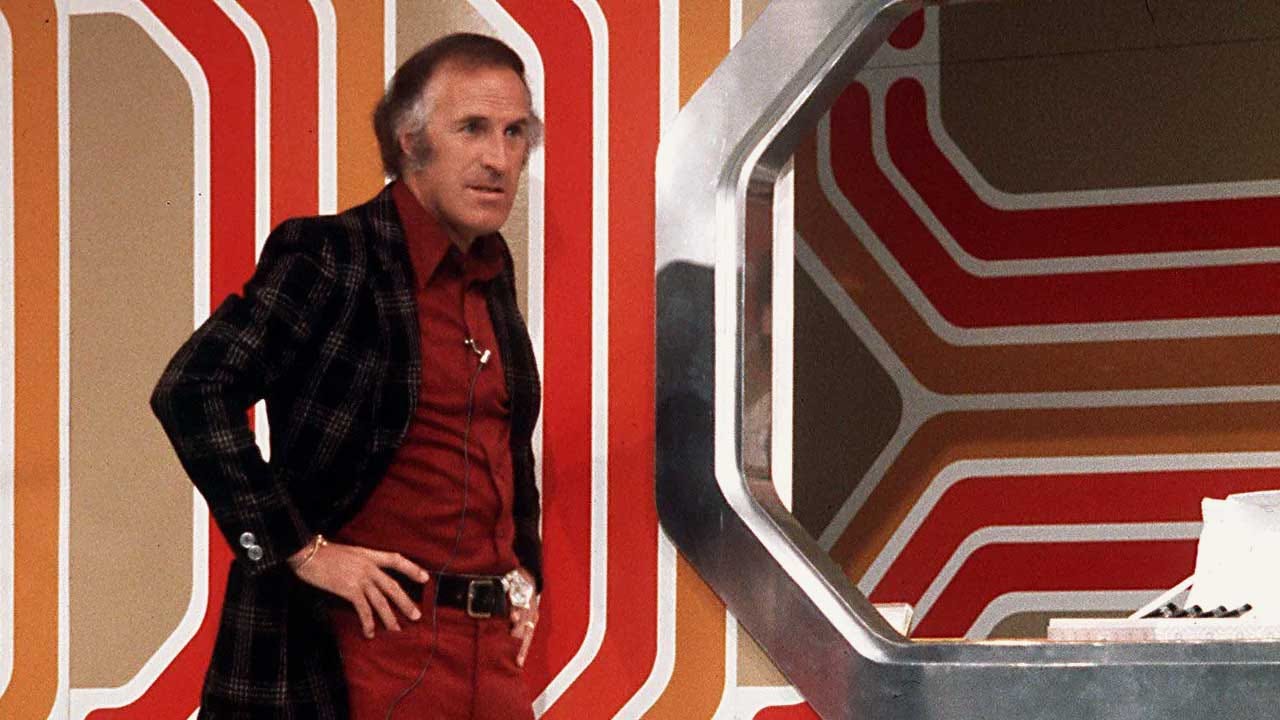
But David was up for the challenge. He’s a man who thrives on humour and camaraderie. And that’s born out of working in a potentially life threatening environment underground, where if you didn’t laugh, you would either scream, cry or go quietly mad.
David always wanted to star in a podcast. So here we go with our very own game-show. It’s special edition of Billy’s Chinwag, which is straight out of my novel Houdini Window. And who better to host it than my fictional light entertainer Laurie Lovelace, and his irreverent vent-doll Billy.
So without further ado, it’s over to you, Laurie.
Billy’s Chinwag
TV Script.
Cue: Central TV ident and Billy’s Chinwag theme tune and a suitably energised studio audience.
Laurie: Thank You.
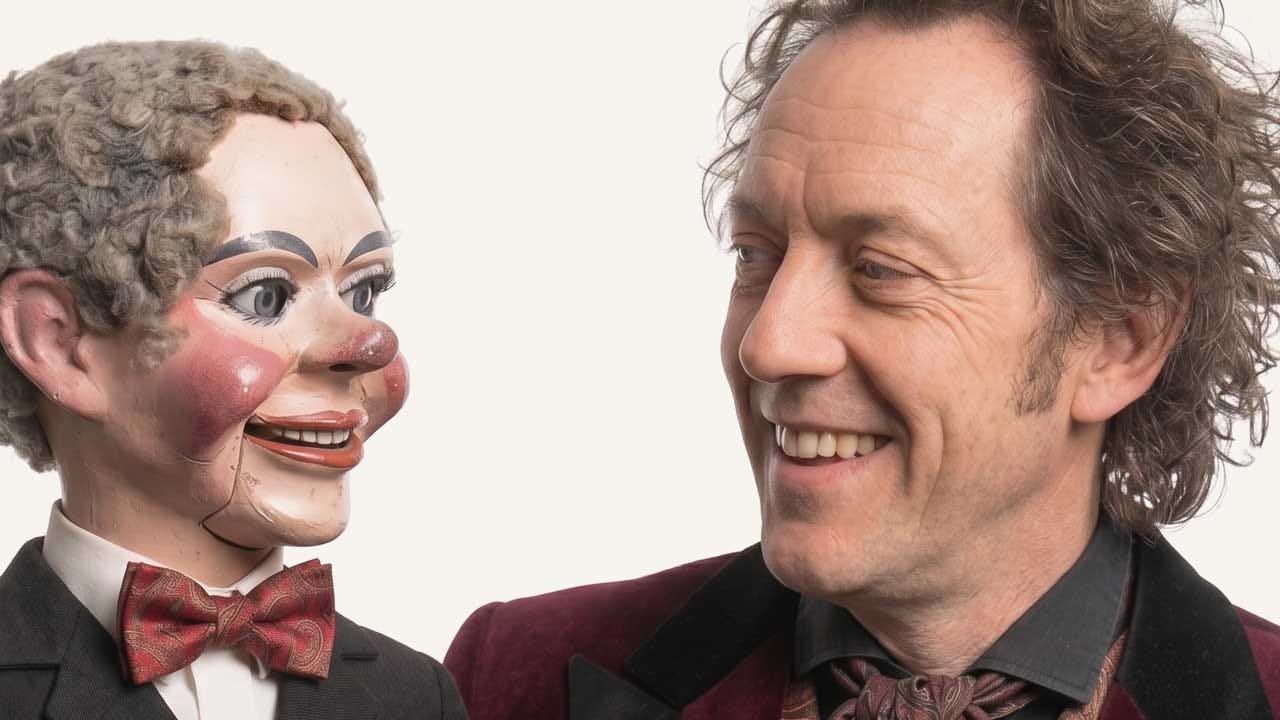
Billy: Hey Laurie, do you know what they call coal that was never dug up?
Laurie: No sorry Billy, I don’t. But I’m sure you are going to tell me.
Billy: Never mined.
Cue: Dubbed laughter.
Laurie: Billy, concentrate please. It’s time to introduce our very important guest. Ladies and gentlemen, boys and girls would you please put your hands together and welcome live on-stage our very special guest. It’s the Mining Historian Doctor David Amos and he’s here to play our conveyor belt game. I’m sure everyone knows the rules of the game. But if not, here’s a quick recap. Now David, you will see ten familiar objects pass in front of you on the conveyor. It’s your job to describe each object in no more than thirty seconds.
Billy: Hey! Can I press the buzzer yet?
Laurie: No Billy. David’s got thirty-seconds for each object on the conveyor belt. OK?Get ready David. Your time, starts, now.
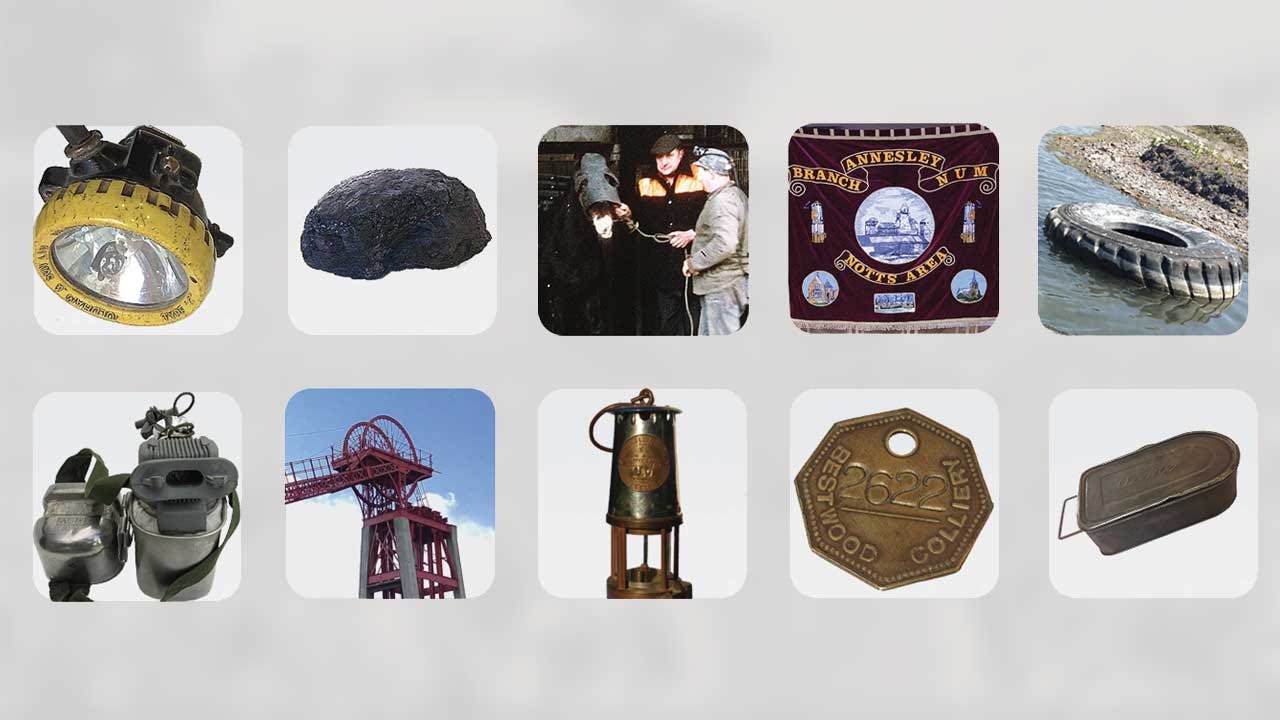
Della: Object number one is a miners’ lamp.
David: Right. The miners’ cap lamp was officially ‘Electric Safety Lamp’ which took over for miners working. With a battery on your belt, a large battery what you had to recharge all the time. With a cable that went to a head-piece that fitted on your helmet. They came in, basically in the 1940s and were standard by the 1950s.
SFX: Applause and buzzer.
Della: Object 2 is a lump of Coal.
David: Coal is a substance that was used particularly during the industrial revolution to produce steam to operate steam railway locomotives, factory boilers, and powered the whole of industry. Dirty fuel, basically deemed ‘dirty’ nowadays. Carbon-based. Came in sedimentary rocks in seams.
SFX: Applause and buzzer.
Della: Object 3 is a Pit Pony.
David: The pit ponies were introduced into the pit, basically, after the 1842 Act which banned women and children going underground. Their job initially was to haul tubs which were small underground railway, stuff, out of the pit, bringing the coal out. Once that went to conveyors, their job was to take materials into the pit and bring empty tubs out. They finished in the early nineteen-seventies.
SFX: Applause, buzzer and incredulous laughter as David manages to keep within the thirty-second time limit again!
Della: Object 4 is a Mining Banner.
David: Mining banners came from the mining trade unions as a symbol of their membership of the union and the unity. They usually put the lodge, the banner could be political, or scenes from local (the locality), and it normally depicted which branch of the National Union of Mineworkers was on it. In some cases you got one for the Deputies Union and a few from the breakaway UDM (the Union of Democratic Mineworkers).
SFX: Applause and buzzer.
Della: Object 5 is the Pit Tip.
David: Pit tips were called ‘spoil heaps’ or were called ‘dot hills’ locally (dirt hills) in local dialect. And that’s where, particularly after the machines got coal from the fifties onwards, the waste, two-thirds of it, or half of it would be coal, and half waste. And that went up to the tips, which is all bits of smaller coal and dirt. And formed, like mountains or hills.
SFX: Applause and buzzer.
Della: Object 6 is a Self-Rescuer.
David: Self-Rescuers were designed following, particularly the 1950 Creswell fire underground and other various fires. They were like a respirator which converted carbon monoxide, which is poisonous, to carbon dioxide. And gave the miners an hour to get to a fresh air base. It came into common use about 1970 onwards.
SFX: Applause and buzzer.
Della: Object 7 is the winding wheels or Headstocks.
David: Headstocks were the symbolic cathedrals of industry what lay over the shafts. And the winding rope went from the engine-house, over the headstock-wheel. And connected to the ‘cage’ or what most people would know as' ‘lifts.’ That went up and down the shafts, bringing the coal out, taking the men in, and taking materials into the pit.
SFX: Applause and buzzer.
Della: Object 8 is the Flame Safety Lamp.
David: Flame safety lamps were more commonly known sometimes as a ‘Davy lamp’ or a ‘Clanny lamp’ after the designers. These were introduced, basically made of gauze so they were safe underground and they couldn’t ignite methane gas. After the use of electric cap lamps, they became used for gas testing mainly by mine officials, who could tell on the flame how much methane was in the general body (of air).
SFX: Applause and buzzer.
Della: Object 9 is the Brass check or Mottie.
David: Mottie was an identity brass tag. You had two of them, each miner, that acted not just for pay but acted more importantly as a safety device. When you went down the pit, you gave one to the Banksman. And when you came out of the pit at the end of the shift again to the Onsetter. They went to a board then the Time and Wages showed which area you were working in. In case there was an incident.
SFX: Applause and buzzer.
Della: Object 10 is the Snap Tin
David: Snap tin was a metal tin that the miners took their lunch, or sandwiches down the pit. One part sealed into another so it stopped vermin getting into it. They went out of use about the sixties or seventies when they were replaced by plastic Tupperware.
Billy: I don’t believe it! (David beat the clock)
SFX: Studio erupts into congratulatory chaos.
Laurie: Well done David. Good game, good game. You’ve won tonight’s star prize.
Claude in Coaltown
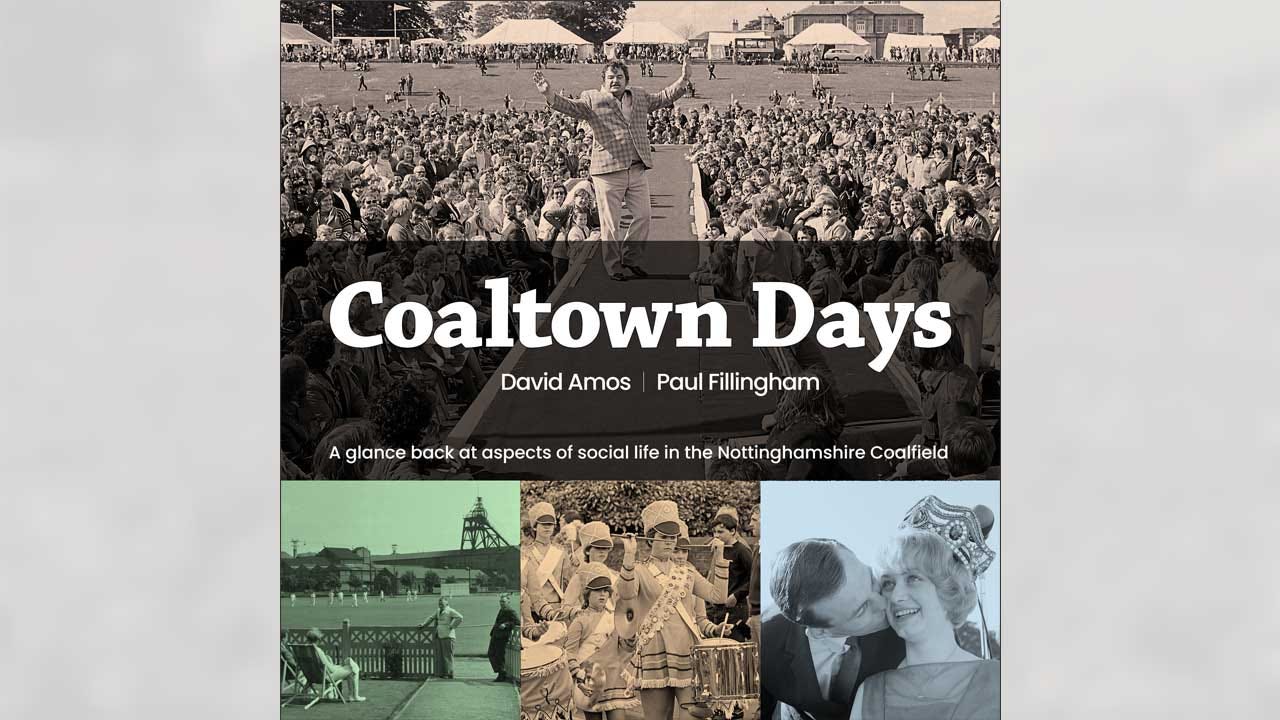
After the game show, we got down to the serious business of Coaltown Days A print publication documenting the leisure and cultural aspects of life above ground.
At this stage, the creative process is purely mechanical. It’s gathering pictures from various sources and imposing some kind of uniformity on what is often a messy mountain of old prints, amateur photographs, newspaper cuttings, and other ephemera.
It’s a time-consuming task, far removed from the glamour of TV game-shows. So I wanted to show David how I’d used AI to speed things up. I’d used Claude to identify and list all the images and related captions that were hidden in the draft of the book. The draft is about a hundred pages long. There were 129 images total and the automated process took minutes, instead of hours.
Claude also flagged some discrepancies in the captions, which we were able to fix there and then right in front of the screen. David was curious about the kinds of things AI could be used for, especially at a time when the value of this new technology is being challenged. And quite rightly so!
So I showed him an ElevenLabs read-through of the manuscript. Hearing the text, rather than just seeing it, was enough to catch what careful eyes had actually missed. A glaring error, right there in the first chapter. The error that had evaded the scrutiny of three human proof-readers, myself included.
David was impressed. Impressed enough that he told me his own story about technological change.
Challenging assumptions
Contrary to popular belief, deep coal extraction had evolved into an industry that was highly mechanised, and quantified using electronic monitoring and computer technology.
At a fishing match, David once settled a row with a former workmate who reckoned all this modern technology was ruining everything. David asked him to cast his mind back to when they worked underground together.
“Imagine a brand new coal face in front of us” he said. “And on the left there’s a pick axe and on the right a trepanner.” A trepanner being an automated cutting machine that works like a giant bacon slicer. My dad used to drive one. It’s why he was almost deaf. Anyway, David’s mate looked over at the imaginary wall of coal and the two choices in front of him. It didn’t take him long to decide. Pointing at David’s imaginary trepanner on the right.
“Fair dues, youth.” He said. The argument for technological change was won.
Epilogue
So, that’s three chinwags with three very different collaborators.
Script editing with Adrian. The same conversation we usually have down the phone. But with the benefits of Portuguese pastries.
An AI workshop invitation from James. Born out of nothing more than showing him how I actually work.
And with David, a recording of ten iconic mining objects in his native Eastwood dialect, a caption checklist, an AI proofreading session and a fresh layout for a new research publication.
But the connective tissue that mattered more than any of the tools that were mentioned in these three sessions was the meetings themselves.
Three catch-ups, three people, who I don’t see anywhere near, often enough. So, three chinwags in and the resolution’s is simple. Don’t leave it so long next time.
Laurie: Anyway, ‘toodle-pip’ as we posh TV celebrities say. And remember...
You make magic real
(Special bonus - Wait for the gorgeous sub-bass ‘burrrrrr’ at the end of the audio track).
See you next time - Paul Fillingham.
Digital magic available here!
Good design begins with good questions.
UX research finds them, design thinking answers them.
Links related to this substack:
The Brinsley Circular Trail - Visit D.H. Lawrence country